
DIFFERENT PRINTING METHODS
DIFFERENT PRINTING METHODS
Discover our feed/news feed
Which PRINTING METHOD would be the best for your project ?
When working on a project, a specific attention has to be paid while selecting the appropriate printing method: logo to be printed, number of colours, product composition, printing area, quantity, deadline and budget.
What are the different printing methods ?

SCREEN PRINTING
Screen printing is the most widely used printing process in the promotional textile industry. It ensures a clean finish with a good resistance in time. Screen printing is the perfect process for tightly woven textiles such as cotton t-shirts and sweatshirts or thick fabrics.
Pros :
- Best value for money for large prints
- Perfect reproduction of each colours and details
- Long durability
- Resistance of the prints after numerous washings
- Simple and inexpensive process
Cons :
- Drying time is time consuming
- Small details can sometimes be blocked by the ink
The steps :
1. Apply the ink through a frame directly on the textile.
2. Each colour is individually applied.
3. The textile goes on a heated tunnel so the ink can be absorbed into the fibres.
Maximum number of colours : 8
Minimum quantity of pieces : 50
Characteristics : Highly precises lines and colours
Washing conditions : 40° inside out
Cost : Not expensive for medium and large series
Product Selection >>
TRANSFER
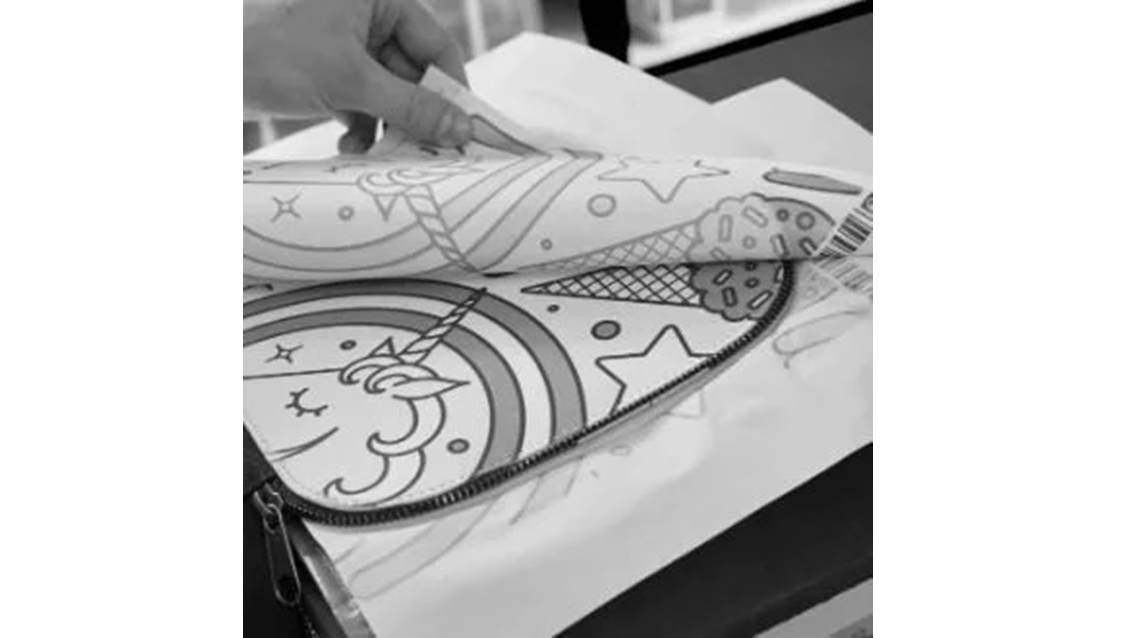
Transfer is a process that has been practiced for many years and is one of the most familiar processes to consumers. Ideal personalisation method for areas such as sleeves, collars, labels, luggage, jackets and bodywarmers.
Pros :
- Perfect for small orders
- Can be used on all types of textiles
- Allow access to difficult personalised areas
Cons :
- Impossible to achieve colours gradations
- The visual must not contain too many details
- Plastic effect feel
- No long durability
The steps :
1. Position the textile under the heat press.
2. The design is printed on a sheet by a digital screen printing process.
3. The sheet has to be on the requested area
4. Close the press and under the heat, the flocking is fixed on the clothes.
Maximum number of colors : Unlimited
Minimum quantity of pieces : 10
Characteristics : Preserves all details of the visual in an unlimited number of colours and offers the advantage of being able to be applied on any type of support
Washing conditions : 30° inside out
Cost : The least expensive type of printing
Product Selection >>
DIRECT-TO-GARMENT PRINTING – DTG
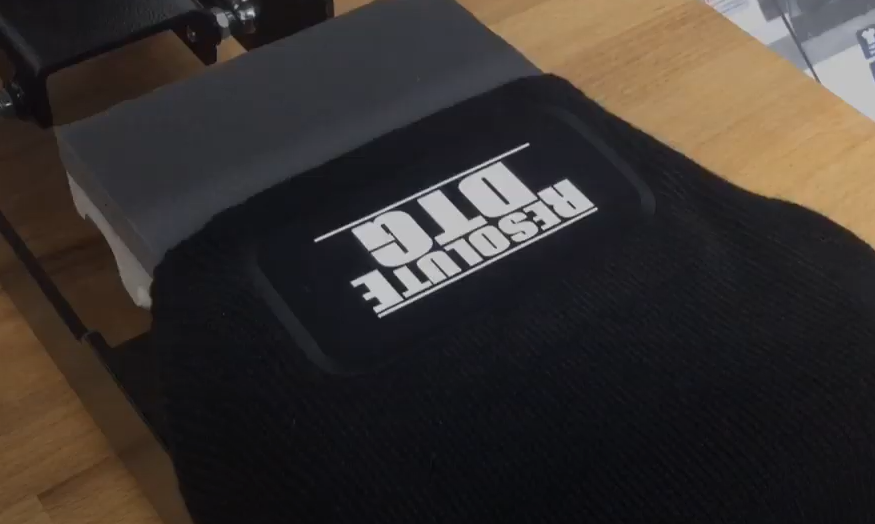
Direct-to-garment printing (DTG) is the most recent and the most modern printing process. Your design is directly sent from the computer to the garment.
Pros :
- The precision of a photo reproduction and its colors
- Very short lead times
- Possibility to work on difficult visuals, very colorful, without background
- The finished product lasts longer
- Ideal for small and medium series
- Printing possible on white and colored clothes
- Affordable for small runs
- Fast to print
- Eco-friendly: impact on the environment is less important
Cons :
- The textile must be made of approximately 80% of cotton to guarantee a good resistance of the ink and an optimal finish.
The steps:
1. The garment is prepared and loaded into the machine.
2. The machine prints the visual on the fabric.
3. The textile dries in an oven.
Max number of colors : Unlimited
Minimum quantity of pieces : 1
Characteristics : Soft touch printing, without relief. Possibility to print gradients and photos in high resolution.
Washing conditions : 40° inside out
Cost : Not expensive for small series
Product Selection >>
EMBROIDERY
Embroidery is the most noble and timeless textile personalisation method. Embroider directly your logo on clothes according to its forms and its colours, by adding a flat or raised pattern made of polyester threads. Embroidery can be applied on almost all support except some fine textiles.
This printing method adds value to your textile.
Pros :
- Qualitative finish
- The most durable printing process
- Very resistant
- 15 different colour threads on the same visual
- Embroidery texture brings an original touch and an elegant aspect
Cons :
- The more the design is complex, the more expensive it is
- The visual must not be too thin to be realised
- Embroidery is not recommended on waterproof clothes

The steps :
- Turn the logo into an embroidery file (digitalisation)
- Place the embroidery threads on the machines.
- Prepare the textiles on the embroidery frames.
- Start the embroidered logo production
Maximum number of colors : 15
Minimum number of pieces : 6
Characteristics : A very fine and qualitative work for small and large series
Washing conditions : 60° C
Cost : More expensive than any other methods
Product Selection >>
SUBLIMATION
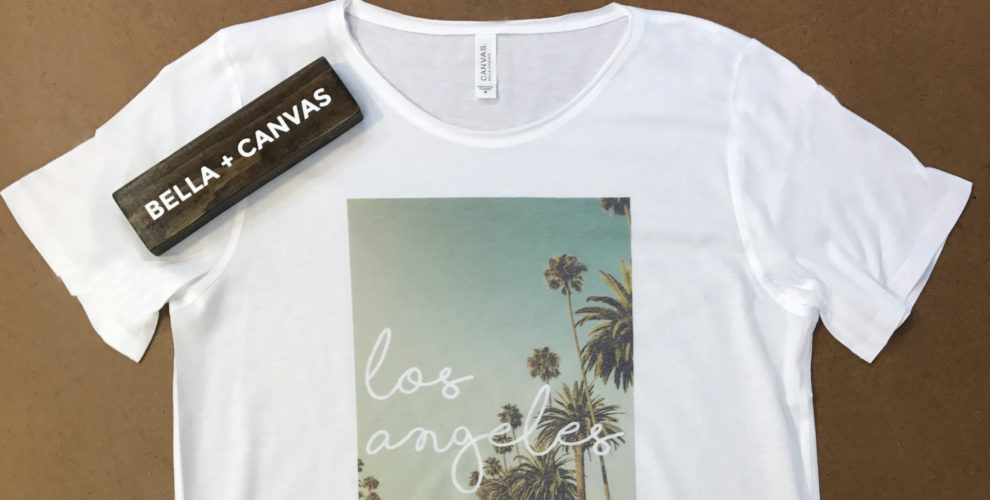
Sublimation printing allows the reproduction of all types of visuals, with no color limit, on mainly white polyester clothes. Sublimation produces: super bright designs and bold colours that look like a photograph, the designs do not fade away easily, the prints are soft (as inks directly dye the fibres).
Pros :
- Long durability
- Quality feel
- Resistance of the prints after washings
- Inexpensive process
Cons :
- Low opacity on dark textiles
- Can only be used on light colored textiles
- Can only be used on polyester products
The steps :
1. Printing visual on a transfer paper.
2. The design on the paper is dyed on the fabric by applying and pressing a special ink heated to a high-temperature.
3. Remove the paper and remove the garment from the machine.
Max number of colors : Unlimited
Minimum quantity of pieces : 10
Characteristics : Printing method on light colored polyester clothes
Washing conditions : 40° inside out
Cost : Not expensive for medium and large series